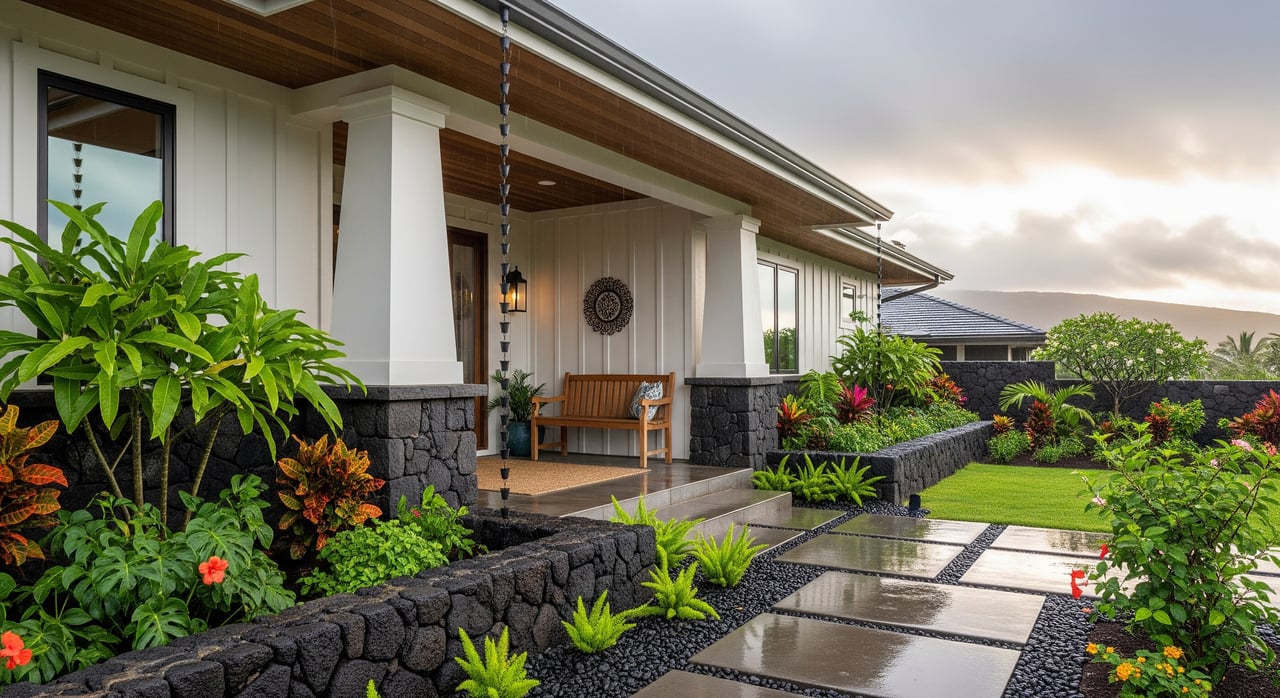
Rain is part of daily life in Wahiawa. On photo day or at a showing, it can also be the reason a front walk looks slick, a lawn reads soggy, or the entry feels uninviting. You can flip that script. With a drainage-first plan, durable materials, and tropical plants that love moisture, your curb appeal will look bright and cared for in any weather. In this guide, you’ll learn quick wins and smart upgrades tailored to Wahiawa’s warm, often wet climate so buyers step onto a clean, dry, welcoming entry. Let’s dive in.
Wahiawa rain and microclimates
Wahiawa sits in central Oʻahu and sees more rain than many coastal areas. Local stations commonly report about 50 to 64 inches of rain a year, with warm temperatures in the mid 70s to low 80s. That mix means high humidity and frequent wet days. These conditions vary over short distances, and soils can drain well in one spot and hold water in another.
- Check local rainfall norms to set expectations and plan materials. See the Wahiawa station summary for typical rainfall and temperatures at climate-charts and a month-by-month view of wet days at Weather‑US’s Wahiawa climate page.
- Know your soil. The USDA’s Wahiawa series describes deep, well-drained soils formed from basalt, but you can still find pockets that drain slowly. Review the USDA soil series notes and test your own low spots before planting.
Start with drainage
Good drainage is the fastest way to take a yard from soggy to show-ready.
Redirect roof water
- Add splash blocks or downspout extensions so water does not pool near the entry, walkway, or foundation.
- Route runoff to planted areas or a safe outlet, keeping flow away from structures and neighboring lots.
- Use the City and County’s homeowner tips to contain the rain.
Add green stormwater features
- Install a small rain garden, permeable path, or a gravel swale to slow and soak water on-site.
- Even small projects can reduce puddles and improve the look of wet areas. See Honolulu’s guidance on Green Stormwater Infrastructure for simple options.
Fix problem spots fast
- Topdress low, muddy edges with compacted gravel or permeable pavers that slope slightly away from the house.
- Lift entry planters onto risers so water drains and no stains form under pots.
Safe, good-looking surfaces
Wet walkways and porches should look clean and feel secure underfoot.
Choose non-slip walkways
- Use textured concrete, pavers with grip, or a grit-finished sealer on existing paths.
- Keep joints open and clean so water drains instead of pooling.
Prefer permeable entries
- Mix permeable pavers, gravel bands, or stepping stones with planting pockets to reduce algae-prone surfaces.
- Slightly slope hardscape away from the threshold to keep the entry dry.
Use moisture-smart porch materials
- Consider composite decking, sealed concrete, or exterior-rated hardwoods.
- Use stainless or galvanized fasteners to resist corrosion in humid conditions.
Planting that thrives
Lean into plants that love tropical humidity and organize them by how wet the spot stays.
Layer beds for instant impact
- Combine low groundcovers to hide wet soil, mid-height shrubs for color, and a small accent tree or palm for structure.
- Browse UH CTAHR’s landscape lists for Hawaiʻi-adapted choices on the UH Master Gardener plant resource.
Groundcovers for wet or sloped spots
- Native or well-adapted options like ilima, naupaka, and kupukupu fern handle moisture and fill quickly.
- For erosion control or low basins, consider perennial peanut or pili grass. See groundcover ideas at CTAHR’s Pacific Crops resource.
Avoid problem species
- Some fast spreaders can become invasive. Cross-check selections with non-invasive lists, such as this CTAHR-linked overview of non-invasive fragrant plants, before purchasing.
Quick curb-appeal wins
- Add a simple covered entry or temporary awning for showings so guests arrive dry.
- Place large, dark doormats outside and inside to control water and mud.
- Replace a soggy lawn strip with interlocking stepping stones and groundcover joints for a tidy, photo-ready edge.
- Stage two potted tropicals under cover on risers for height and color.
Maintenance that shows well
Moisture control and routine cleaning will keep the exterior fresh and buyer-ready.
Keep moisture in check
- Clean gutters and downspouts, and route water away from the entry and foundation.
- Fix small leaks fast and dry wet areas within 24 to 48 hours to avoid mildew and mold. See the EPA’s brief guide to mold and moisture for simple steps.
Showing-day checklist
- Pressure wash algae or mildew from walks and drives. Remove leaves and debris.
- Mow and trim early so grass does not look waterlogged. Sweep away minor standing water from photo angles without sending runoff toward structures.
- Set a small bench or stool at the door with folded umbrellas for a thoughtful touch.
Freshen paint where needed
- Touch up siding, fascia, or soffits with mildew-resistant exterior paint designed for humid climates. See example exterior formulas like Sherwin‑Williams Duration.
Be ready for buyer questions
- Will the yard stay soggy after heavy rain? Point to grading, downspout changes, and any GSI you added, such as a rain garden or permeable path. Share that you used Honolulu’s Contain the Rain guidance.
- Has the home had water or mold issues? Answer with dates and receipts for any work, and explain routine maintenance like gutter cleaning and slope away from the foundation, which the EPA recommends.
- What upkeep does the landscape need? Explain seasonal leaf cleanup, pruning for airflow to reduce mildew, occasional pressure washing, and choosing plants from UH CTAHR’s landscape lists for lower maintenance.
Next steps
- Test drainage in key areas with a simple percolation check or consult a local landscape pro. Use the City and County’s GSI resources to plan small fixes.
- Build a compact, layered front bed with Hawaiʻi-adapted plants so your entry looks bright even on a rainy day.
- Upgrade the path and threshold with non-slip, permeable materials for safe, clean showings.
If you want help prioritizing upgrades that add value before you list or rent, reach out to Sean Fujimoto for local, practical guidance that fits Wahiawa’s market and climate.
FAQs
How much does it rain in Wahiawa and why does it matter for curb appeal?
- Local stations commonly report about 50 to 64 inches of annual rain, with frequent wet days, so drainage, non-slip surfaces, and moisture-loving plants keep your entry looking clean and safe year-round. See rainfall norms at climate-charts and wet-day patterns at Weather‑US.
What are the best walkway materials for wet conditions in Wahiawa?
- Textured concrete, grip-rated pavers, or grit-sealed surfaces shed water and reduce slips, and permeable designs help prevent puddles near the entry.
Which plants look good and handle Wahiawa’s rain with low maintenance?
- Layer native or well-adapted picks like ilima, naupaka, kupukupu, ixora, and ti, and use groundcovers such as perennial peanut or pili grass in low spots. Browse UH CTAHR’s plant lists for more choices.
How do I keep mold and mildew off my exterior in a humid climate?
- Clean gutters, fix leaks promptly, and dry wet areas within 24 to 48 hours. Wash algae from paths and use mildew-resistant exterior paint where needed, following the EPA’s moisture guidance.
What simple projects reduce puddles before listing photos?
- Redirect downspouts to planted areas, add a small rain garden or gravel swale, refresh the entry with permeable pavers, and elevate pots on risers using Honolulu’s Contain the Rain homeowner tips.