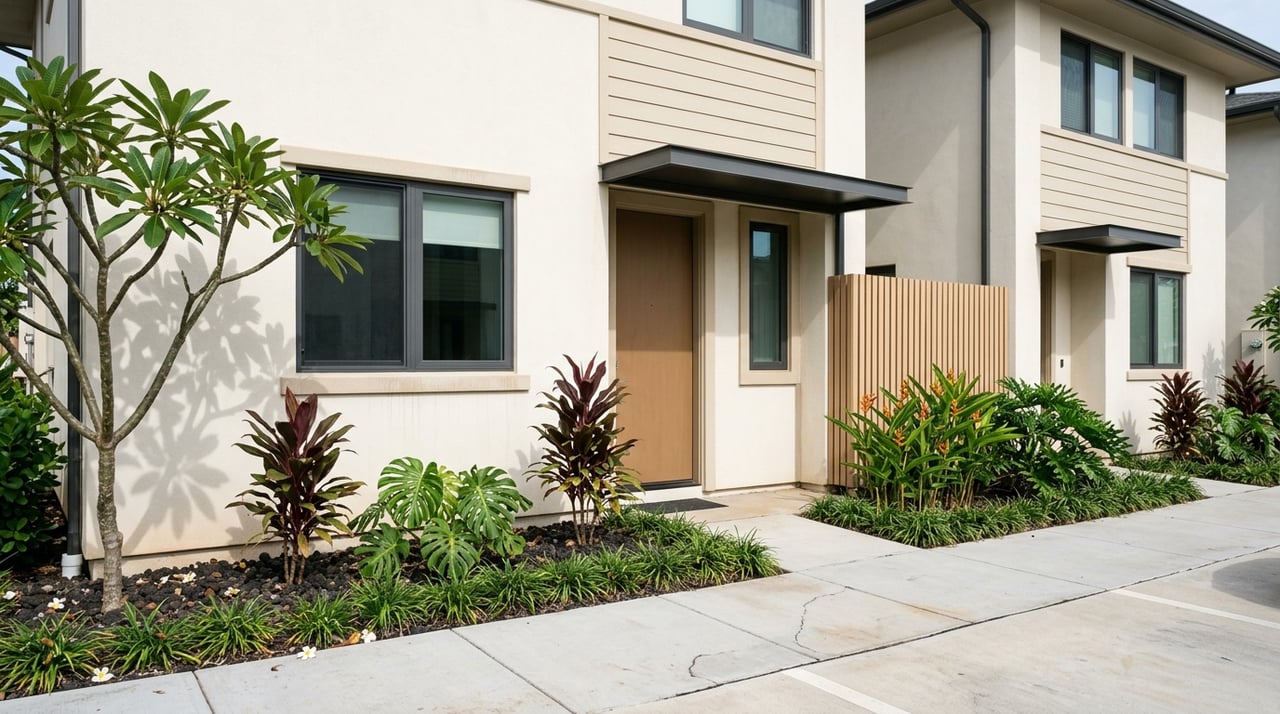
Thinking about buying one Mililani property and turning it into two, then three? That can be a smart long-term move, but small rental portfolios work best when you plan for the real numbers, the local rules, and the day-to-day management from the start. In Mililani, a steady housing profile and strong owner presence can support a long-term rental strategy, especially if you focus on well-maintained homes and realistic cash flow. Let’s dive in.
Why Mililani fits long-term rentals
Mililani Town is a relatively settled part of Oʻahu, and that matters when you are building a small rental portfolio. According to Census QuickFacts for Mililani Town, the area had 28,121 residents in 2020, an 81.2% owner-occupied housing rate, and 94.0% of residents living in the same home one year earlier.
That kind of stability does not point to a high-turnover rental strategy. Instead, it suggests a market where long-term planning, solid property upkeep, and reliable tenant relationships may make more sense than chasing quick moves.
The same Census data also shows a median gross rent of $2,384, a median owner-occupied home value of $923,900, and median household income of $127,363. For you, that means rental demand should be weighed alongside higher acquisition costs and ongoing carrying expenses.
Start with a simple portfolio plan
If you are starting small, your first goal is not owning a huge number of units. Your goal is to buy or convert a property that you can hold comfortably, operate consistently, and use as a foundation for the next one.
A practical starter portfolio in Mililani often begins with one of these property types:
- A single-family home
- A townhome
- A condo
Each option has a different cost structure. Single-family homes may offer more control over the property, while townhomes and condos often include HOA dues and association rules that affect both monthly expenses and how the property can be operated.
Understand HOA costs early
In Mililani, attached housing can be appealing for first-time investors because it may offer a lower purchase price than some detached homes. But HOA dues should never be treated as a side note.
According to HI Roots Realty’s Mililani HOA guide, dues may cover common-area upkeep, exterior maintenance, amenities, security, trash, water or sewer, reserve contributions, management, and insurance. Those items can add value, but they also affect monthly cash flow.
Before you commit to a townhome or condo, review:
- The current HOA budget
- The reserve study
- CC&Rs
- Board meeting minutes
- Insurance declarations
- Fee schedules
- Any special assessments
This step matters because a property that looks affordable at first glance may carry more monthly cost than expected. If you are building a small portfolio, thin cash flow on your first property can slow everything that comes after it.
Know how property taxes can change
One of the easiest mistakes when starting a rental portfolio is assuming your tax situation will stay the same after a property becomes a rental. In Honolulu County, tax classification and exemption status can affect your annual cost.
The City and County of Honolulu’s FY2025-26 real property tax table sets the Residential rate at $3.50 per $1,000 of net taxable value. The Residential A rate is $4.00 on the first $1,000,000 and $11.40 above that.
Timing also matters. Based on the county calendar, tax bills are mailed July 20, the first installment is due August 20, exemption claims are due September 30, exemption changes must be reported by November 1, and Board of Review appeals are due January 15.
If you start with a home you live in and later convert it to a rental, be proactive. The county’s home exemption guidance explains that to keep a home exemption, the property must be your principal home as of October 1, with occupancy often shown by more than 270 days per year.
That same guidance also notes that for leased property, the lease must be residential, at least five years in duration, and require the lessee to pay all property taxes. It also explains that a parcel or condo unit assessed at $1,000,000 or more with no home exemption can fall into Residential A.
For you, the takeaway is simple: if you convert a higher-value Mililani home into a rental, your tax picture may change. Build that into your budget before you buy the next property.
Talk to lenders before you shop
Financing a future rental is not the same as financing a home you plan to live in long term. If your plan is to keep one property and buy another, you should have that conversation with a lender early.
According to Fannie Mae’s rental income guidance, rental income can be documented with a current signed lease or Schedule E. The same guidance says that when a property has recently been converted to an investment property, the lender should obtain the most recent Schedule E to confirm the property was not previously producing income.
The Consumer Financial Protection Bureau summary within that underwriting framework also shows that when a lease is used to analyze rental income, gross rent is reduced by 25% for vacancies and maintenance before PITI and HOA dues are subtracted. That means the rent you expect to collect is not the same as the rent a lender may use for qualification.
Freddie Mac also states that investment property mortgages have added requirements related to reserves, housing-expense ratios, rental income, rent-loss insurance, and underwriting items. In practical terms, you should expect more documentation and more scrutiny.
Questions to ask your lender
Before you buy or convert a property, ask:
- Will projected lease income help me qualify?
- How will HOA dues affect my debt ratios?
- How much in reserves will I need?
- Will you count rental income before I have a tax-return history?
- How will a recent conversion from owner-occupied to rental be reviewed?
These questions can help you avoid buying a property that works on paper but not in underwriting.
Build your numbers around carrying costs
A small rental portfolio becomes sustainable when each property is evaluated with realistic monthly costs. In Mililani, that means looking beyond the mortgage payment.
Your carrying costs may include:
- Principal and interest
- Property taxes
- Hazard insurance
- HOA or association dues
- Routine maintenance
- Vacancy allowance
- Property management fees if used
If you skip one of those line items, your cash flow picture may look stronger than it really is. That can create pressure later, especially when repairs, tax changes, or association costs rise.
Prepare for Hawaii landlord rules
As your portfolio grows from one unit to two or three, operations become more important. Hawaii landlord-tenant rules set clear expectations, and consistent systems can help you stay organized.
Under HRS 521-44, a landlord may require no more than one month’s rent as a security deposit, plus a limited pet deposit. The same statute says a landlord may not collect other move-in money beyond first month’s rent and the security deposit, and must return the deposit or remaining balance within 14 days after termination with written notice of any retention.
For month-to-month tenancies, HRS 666-2 requires at least 25 days’ written notice to terminate. These timelines and limits are manageable with one property, but they become harder to track as the number of units grows.
Decide when to use property management
Many owners start with the idea that they will manage everything themselves. That can work for a while, but each added property increases the workload.
Screening, leasing, maintenance coordination, notices, accounting, and deposit tracking all take time. If you want to grow a portfolio without letting the day-to-day details take over, management systems matter.
According to HI Roots Rentals, its screening process verifies employment and income, runs credit checks, checks prior landlord history, and reviews public records. The company also offers a tenant portal for online rent payment and maintenance requests, plus an owner portal with financial statements, shared documents, monthly summaries, year-end tax statements, and online payment options.
For a small portfolio, that kind of support can make ownership more predictable. It can also help you spend less time reacting to problems and more time deciding when you are ready to add the next property.
A practical Mililani portfolio approach
If you are serious about starting small in Mililani, focus on steady execution instead of speed. This market profile supports a measured approach.
Here is a practical path:
- Buy or convert one property with realistic carrying costs.
- Review HOA documents and tax status before closing or conversion.
- Talk with your lender early about rental income treatment and reserves.
- Set up clear systems for leasing, deposits, maintenance, and reporting.
- Add a second property only after the first is operating smoothly.
That approach may not feel flashy, but it is often how small portfolios become durable ones.
If you are weighing whether to buy, convert, or hold a property in Mililani, working with a local team that understands both sales and long-term management can make the process much clearer. When you are ready to map out your next step, connect with Sean Fujimoto for practical guidance rooted in the Mililani market.
FAQs
What makes Mililani a reasonable place to start a small rental portfolio?
- Mililani has a high owner-occupancy rate, strong residential stability, and housing data that suggest a long-term rental approach may fit better than a high-turnover strategy.
What should you review before buying a Mililani townhome or condo as a rental?
- You should review HOA dues, the association budget, reserve study, CC&Rs, board minutes, insurance declarations, fee schedules, and any special assessments.
How can converting a Mililani home into a rental affect property taxes?
- Converting a property from owner-occupied use to rental use may change exemption status and could affect whether the property is taxed under Residential or Residential A rules.
How do lenders evaluate rental income for a future investment property?
- Lenders may use a signed lease or Schedule E, and they may reduce gross rent by 25% for vacancies and maintenance before subtracting PITI and HOA dues.
What Hawaii landlord rules matter when starting a rental portfolio?
- Hawaii rules limit security deposits to one month’s rent plus a limited pet deposit, require deposit handling rules, and require at least 25 days’ written notice to end a month-to-month tenancy.
When should you consider professional property management for a Mililani rental portfolio?
- You should consider management when tenant screening, maintenance coordination, notices, accounting, and reporting start taking enough time to affect your ability to manage current properties or grow carefully.