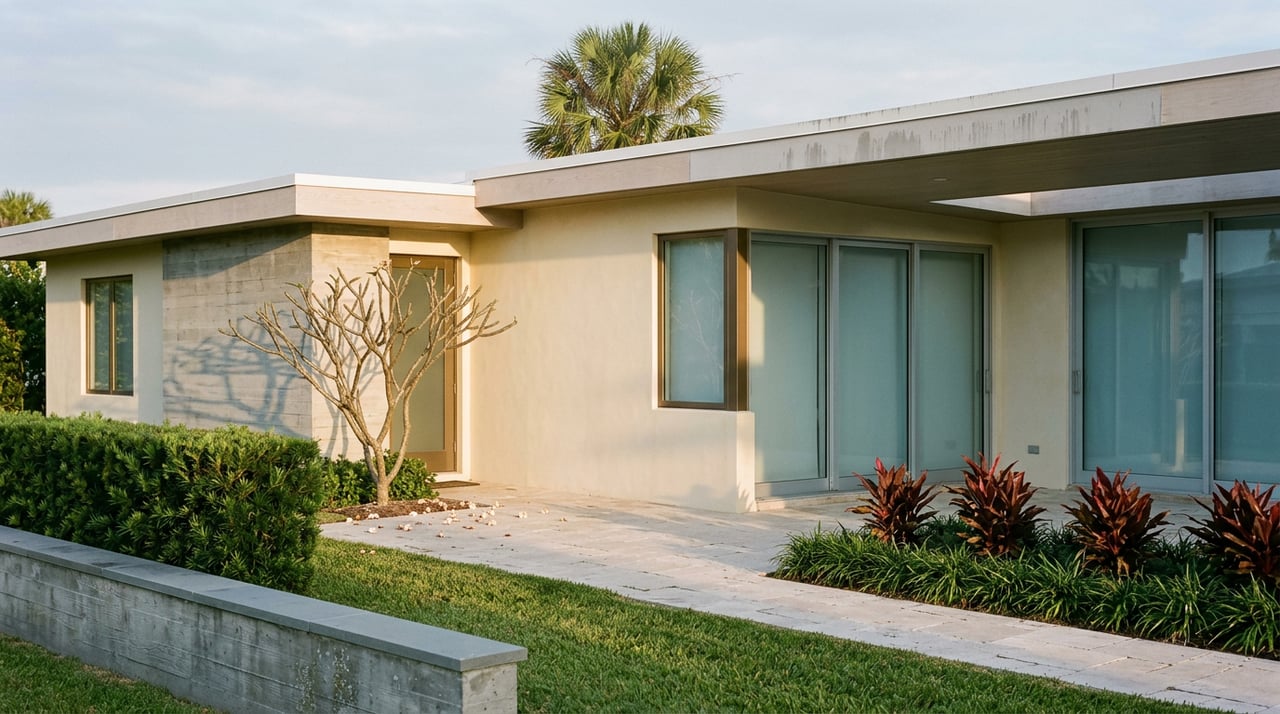
In February 2026, a four-bedroom oceanfront home on Kaimalino Street went up for sale at $3,999,000. The listing sheet reads like most luxury Kailua properties: ocean views stretching to the Mokulua Islands, a private cul-de-sac, underground utilities, two-car garage. Then, under "Sewer," a single word: Cesspool.
A few doors over, a five-bedroom Mokapu Road property built in 1957 carries the same listing field. Same neighborhood, same word, same question every buyer's agent will eventually ask: what happens to this house's wastewater, and who pays to fix it.
If you own property in Kaimalino or along Kailua Beach, that question is not hypothetical. It is sitting on your future disclosure form right now, and how you handle it says more about your negotiating position than almost any other line on the paperwork.
Why This Particular Stretch of Kailua Carries the State's Top Risk Rating
Hawaii's Department of Health, working with the University of Hawaii Sea Grant program, maintains a public mapping tool that ranks every cesspool in the state by environmental risk. The Hawaii Cesspool Prioritization Tool sorts systems into three tiers based on proximity to coastline, groundwater depth, drinking water sources, and streams. Priority 1, the top tier, marks the systems closest to sensitive water and the greatest risk to human health.
According to Kailua Waterways, a local resource that tracks water quality issues in the area, more than 90 cesspools sit in Kaimalino alone, 37 of them on waterfront lots, with two more directly on Kailua Beach. Every one of them carries a Priority 1 ranking. That is not a scattered handful of older homes on the edge of town. It is a dense cluster of some of the most expensive real estate on the Windward side, built decades before anyone was thinking about groundwater contamination, sitting on wastewater technology the state has been trying to phase out since 2017.
The Disclosure Form Does Not Ask You to Fix Anything
Hawaii law does not require a seller to convert a cesspool before closing. What it requires is honesty. Under Hawaii Revised Statutes Chapter 508D, sellers of residential property must disclose all material facts, defined as anything that would measurably affect a reasonable buyer's view of the property's value. The Seller's Real Property Disclosure Statement, the standard form used across Oahu, has a dedicated wastewater section asking whether the property runs on a cesspool, septic system, or individual sewage treatment plant, when it was last pumped, how often, and whether it serves more than one dwelling, including an ohana unit.
The seller signs and delivers that statement within a specific window, either up to six months before or ten calendar days after the buyer accepts the purchase contract. From the date of delivery, the buyer has fifteen calendar days to walk away if something in the disclosure changes their calculus. That clock is one of the more consequential deadlines in a Hawaii transaction, and it starts the moment the paperwork lands in the buyer's hands.
Both the Kaimalino and Mokapu Road listings marked their cesspools plainly. That is the form working as intended. The risk for a seller is not the checkbox itself. It is showing up to that checkbox with no idea what the number behind it actually is.
The Math That Actually Changes the Negotiation
Here is where Kaimalino's situation looks different from most of the state's roughly 88,000 cesspools, and why that difference matters at the closing table.
| Path to compliance | Estimated cost per household | Who controls the timeline |
|---|---|---|
| Connect to city sewer, once a line is extended | $8,500 to $10,000 | City and County of Honolulu |
| Convert privately to septic or an approved individual wastewater system | $20,000 to $50,000 or more | Homeowner |
That gap is not small. It is the difference between a manageable closing cost and a project that can eat into a chunk of a home's equity. And it is why the City and County of Honolulu's own planning documents matter here. Back in 2023, Honolulu's Department of Environmental Services named Kailua as one of three specific areas, alongside Kaneohe and Ewa Beach, targeted for new sewer improvement districts that would let individual households tie into the city's main line, according to Honolulu Civil Beat's reporting. City officials at the time estimated that once a line goes in, connecting a single household would run $8,500 to $10,000, dramatically cheaper than a private conversion.
That does not mean a sewer line is arriving in Kaimalino next year. The same reporting noted the approval process for a new improvement district, from neighborhood board presentations through council resolutions to hiring a contractor, takes a minimum of three years before construction even starts. Kailua was named as a target. It has not been given a schedule.
What the City Has Actually Built, and What That Doesn't Guarantee
Separate from the sewer improvement district conversation, the city has been pouring real money into Windward Oahu's wastewater infrastructure. In June 2026, Honolulu broke ground on an $85 million capital improvement project at the Kailua Regional Wastewater Treatment Plant, the facility that treats flows from both Kailua and Kaneohe. The project includes a $61 million dewatering building and a $23 million renovation of the plant's biotowers, the tanks where microorganisms break down contaminants before discharge.
The upgrades were ordered after the plant experienced a mechanical failure in one of its biotowers in 2023, which led to wastewater discharges off Kailua with bacteria readings that exceeded allowable limits by more than six times in some cases, according to Hawaii News Now's coverage of the groundbreaking. City Council Member Esther Kiaʻāina called the investment a matter of protecting "cleaner beaches and a healthier and sustainable community" for Windward Oahu residents.
That plant investment is real and it is happening now. But it upgrades the destination, not the pipes that would carry Kaimalino's wastewater to it. A homeowner deciding whether to wait for a cheaper sewer connection or pay for a private conversion today is making that decision without a confirmed date for the piece of infrastructure that would actually change their number from five figures to four.
What the 2026 Legislative Session Changed, and What It Didn't
The state's underlying deadline has not moved. Act 125, passed in 2017, still requires every cesspool in Hawaii to be upgraded, converted, or connected to sewer by January 1, 2050. Several proposals to accelerate that deadline for high-priority cesspools have circulated in recent legislative sessions, but as of this year none have become law. The 2050 date remains the only enforceable deadline on the books.
What did change in the 2026 session is financing. Lawmakers created a new revolving loan fund, to be administered by the Hawaii Green Infrastructure Authority, offering low-interest and potentially forgivable loans for eligible households converting away from cesspools. As of this writing, the program is still being built out, with no application window open yet. It is worth watching, but it is not something a Kaimalino seller can point to as an available discount today.
What This Means If You Are Listing in Kaimalino or Along Kailua Beach This Year
The instinct for many sellers is to treat a cesspool disclosure as a problem to solve before the sign goes in the yard. In this specific pocket of Kailua, that instinct is worth questioning. Converting privately locks in a cost of $20,000 or more today, on a timeline you control. Waiting keeps the door open to a $8,500 to $10,000 connection that the city has already named as a planning priority, on a timeline nobody controls.
Neither choice is automatically right. What matters is not guessing at either number. Before listing:
- Check your property's exact priority ranking on the Hawaii Cesspool Prioritization Tool using your address or tax map key
- Pull your pumping records and note the last service date, since the disclosure form asks for it directly
- Get a written estimate from a licensed engineer for a private conversion, so a number exists on paper rather than in a buyer's imagination during the fifteen-day rescission window
- Ask whether your property falls within the boundaries the city has discussed for a Kailua sewer improvement district, even without a construction date attached
A buyer's agent working this market already knows Kaimalino's reputation. The seller who shows up with documentation, not just a checked box, is the one who keeps the negotiation about facts instead of worst-case assumptions.
Talk to Someone Who Knows This Stretch of Kailua
Wastewater systems are not the kind of detail that shows up on a postcard, but they are exactly the kind of detail that determines how smoothly a Kaimalino or Kailua Beach sale actually closes. If you are weighing whether to convert now or wait, or you just want a clear-eyed read on what your property is worth with the facts laid out plainly, HI Roots Realty can walk through the specifics with you. Get a Free Home Valuation and start the conversation with real numbers instead of guesses.